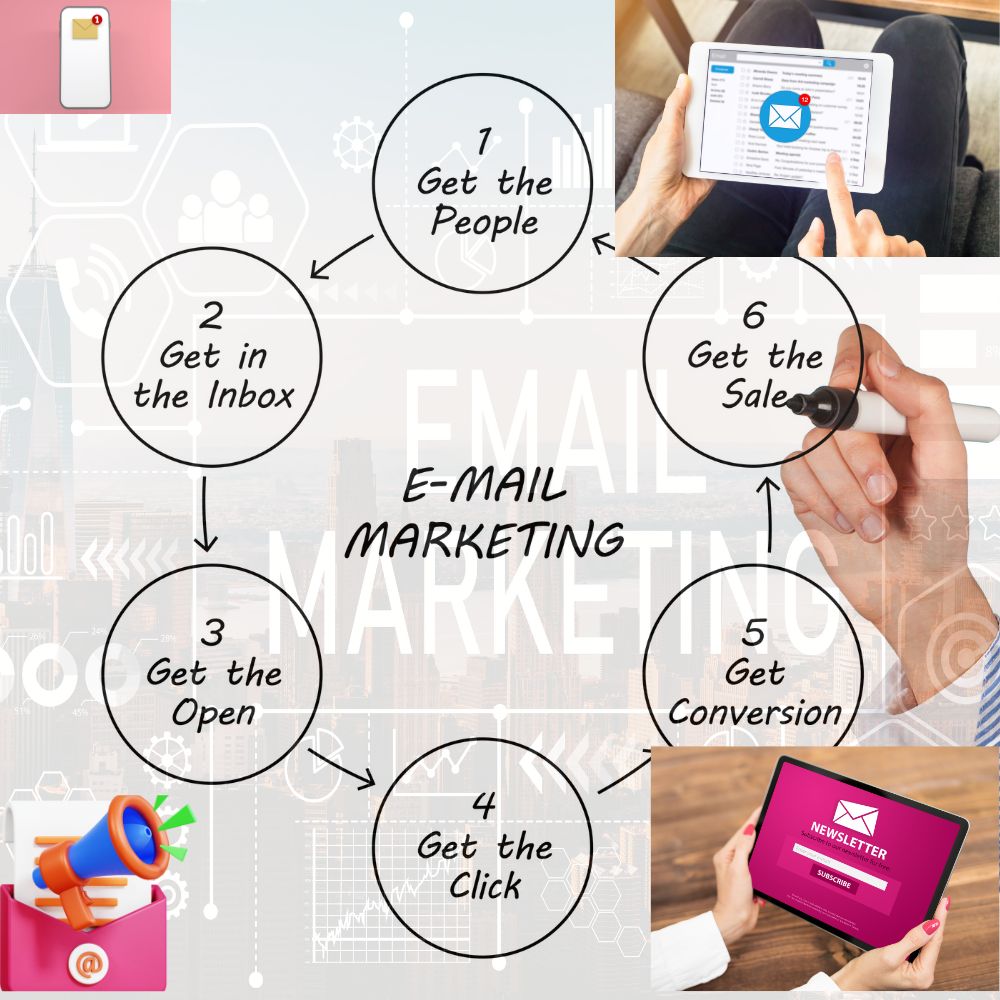
Email marketing remains one of the most powerful digital marketing strategies available to businesses today. While social media platforms come and go, email has stood the test of time as a direct, personal, and highly effective channel for generating leads and driving sales conversions. In this post, we explore how email marketing works, why it delivers exceptional value, and how you can plan a winning campaign for your business.
Email marketing leverages one of the most direct form of digital marketing strategies that involves sending targeted messages to a group of people via email. These messages can range from promotional offers and product announcements to newsletters, welcome sequences, and personalized recommendations.
This is the place where empathy is best nurtured through personalized connections. Apart from lead generation and lead nurturing, customer retention and on-going engagement or re-engagements from passive customers remains a vital part of email marketing.
One of the most compelling reasons businesses invest in email marketing is its exceptional return on investment (ROI).
Studies consistently show that email marketing delivers an average ROI that far outpaces most other marketing channels including social media and paid search.
Some of the widely known benefits of Email marketing are:
Messaing is core part of empathy. The more it is personalized the better is the connection and longer it lasts. This is where audience segments comes into play.
How personalization works:
Personalized emails generate significantly higher open rates, click-through rates, and conversion rates compared to generic campaigns.
Choosing the right email marketing platform is critical to the success of your campaigns. Here are the most widely used tools and what makes each one stand out:
Mailchimp — One of the most popular platforms globally, Mailchimp is known for its user-friendly interface and generous free plan. It offers automation, segmentation, landing pages, and detailed analytics. It is ideal for small businesses and beginners getting started with email marketing.
Klaviyo — A favourite among e-commerce businesses, Klaviyo offers deep integration with platforms like Shopify and WooCommerce. Its powerful segmentation and behavioural automation make it exceptional for driving online sales and recovering abandoned carts.
HubSpot — A comprehensive marketing platform that combines email marketing with CRM, landing pages, and sales tools. HubSpot is well suited for B2B businesses that want a unified view of their leads and customers across all touchpoints.
ActiveCampaign — Known for its advanced automation capabilities, ActiveCampaign allows marketers to build highly sophisticated email sequences based on complex triggers and conditions. It is a strong choice for businesses that want to scale their personalization efforts.
ConvertKit — Popular among content creators, bloggers, and online course creators, ConvertKit focuses on simplicity and powerful tagging and segmentation features that help creators build and monetize their audiences.
Brevo (formerly Sendinblue) — A cost-effective platform that combines email marketing with SMS marketing, live chat, and CRM. It is a strong option for businesses looking for an all-in-one communication solution at an affordable price point.
Each of these tools offers automation, analytics, and integration capabilities — the key features that make email marketing scalable and measurable.
A successful email marketing campaign does not happen by accident. It requires clear goals, a well-defined audience, compelling content, and careful execution. Here is the formula for achieving success with right email marketing strategy:
Step 1: Define Your Goal Start by identifying what you want to achieve. Common campaign goals include generating new leads, promoting a product launch, driving traffic to a blog post, recovering abandoned carts, or re-engaging inactive subscribers. Based on your goal, you will shape the next steps forward.
Step 2: Know Your Audience Identify who you are targeting. Review your subscriber list and segment it based on relevant criteria such as purchase history, location, or engagement level. The more precisely you define your audience, the more relevant and effective your messaging will be.
Step 3: Build or Clean Your Email List Your campaign is only as strong as your list. Ensure your list consists of permission-based subscribers who have opted in to receive your emails. Remove inactive or invalid email addresses to improve deliverability and engagement rates.
Step 4: Craft Your Message Write compelling copy that speaks directly to your audience’s needs and interests. Keep your subject line concise and attention-grabbing. Ensure your email has a clear single call-to-action (CTA) that tells the reader exactly what you want them to do next — whether that is clicking a link, making a purchase, or booking a call.
Step 5: Design Your Email Use a clean, mobile-responsive design that reflects your brand. Most subscribers read emails on mobile devices, so ensure your layout, fonts, and images display correctly on smaller screens. Avoid cluttered designs and keep the focus on your message and CTA.
Step 6: Set Up Automation Where Relevant If your campaign involves a sequence of emails — such as a welcome series or a nurture sequence — set up automation so emails are sent at the right intervals without manual effort.
Step 7: Test Before You Send Send test emails to yourself and colleagues to check for formatting issues, broken links, and spelling errors. A/B test your subject lines where possible to identify which version drives higher open rates.
Step 8: Send at the Right Time Timing matters. Research suggests that emails sent on Tuesday, Wednesday, and Thursday mornings tend to perform well, though the best time will vary depending on your specific audience. Use your platform’s analytics to identify when your subscribers are most active.
Step 9: Monitor and Optimise After sending, closely track your key metrics — open rate, click-through rate, conversion rate, and unsubscribe rate. Use these insights to refine your next campaign and continuously improve your results over time.