Analytics is what decides what’s working and what’s not working. To make right choices, you need the right guide that brings the right light to your journey forward after you have taken the first steps to set your goals, run your campaigns, and achieve results.
Good guidance comes at every step from the beginning to the end, but it is extremely important when you are already on the journey as it can be easy to become lost without proper pointers and directions to keep moving forward.
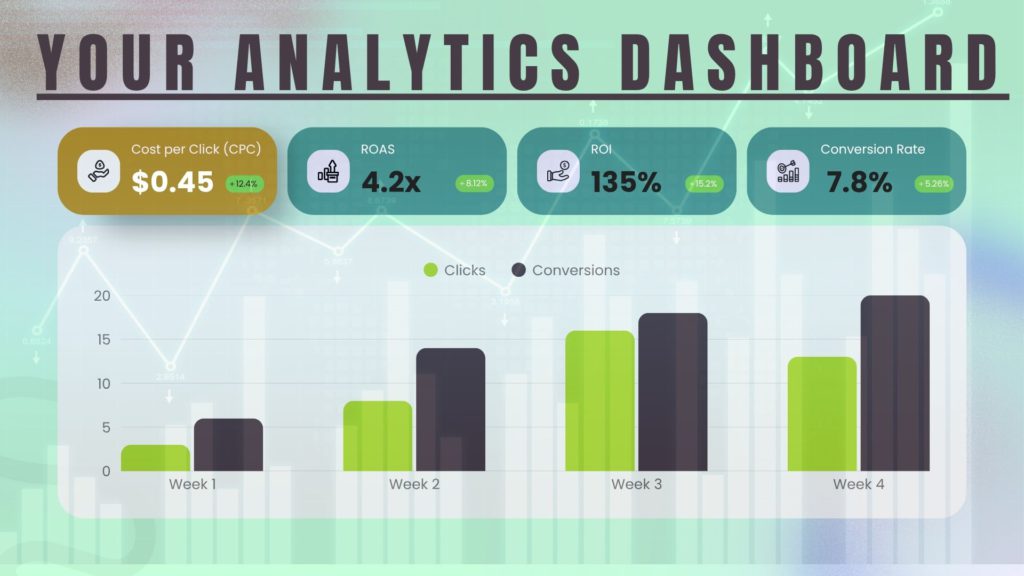
How is it that some video Ads gets more views than others? This is where it is important to assess some of the key performance metrics associated with your content, Ads, posts, videos, story. Metrics ranging from Click through rate for all clicks or link clicks or outbound clicks to cost per lead or cost per result are all important tracking metrics.
When it comes to a video Ad, it becomes important to assess if it can hold someone’s attention enough to keep them watching. A strong first 3 seconds hook is key to stop the mindless scrolling that catches eyes and ears of a viewer to continue watching your Ad. This is where testing comes in. To make sure you can test different hooks you need to assess their performance using certain KPIs which can be viewed in reporting dashboards for Meta or Google Ads which gives an understanding how well different hooks performed based on number of people who watched.
You also want to track your entire customer journey from top of funnel to scrolling to bottom of funnel (from page view to add to cart to checkout to purchase). This gives an idea of dropout at each step and helps you to fix any issues with your website that could possibly cause that dropout. Data is at heart of all your future decision making for better performance in the market.
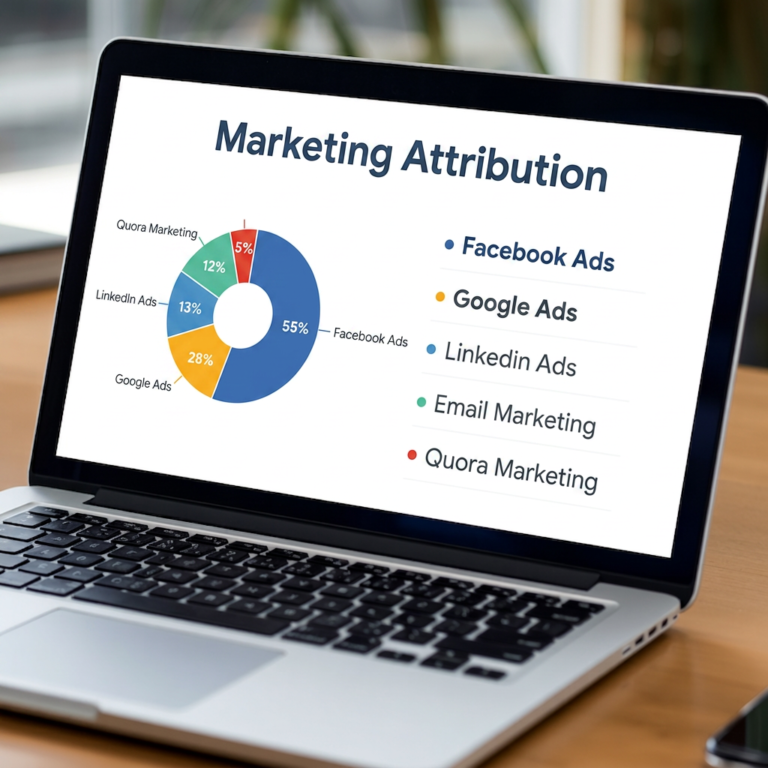
You also want to attribute your marketing efforts to right sales channel and social media platforms. This is where reporting tools like Google Analytics 4, Hubspot, Hyros comes into play.
To decide on when to scale your Meta Ads is again a decision made on metrics you observe from your existing campaign. If there is good ROAS and sufficient conversions and your Ad frequency is <2 then it might be a good idea to start scaling your campaign vertically by investing more budget. However, if the Ad frequency is high and same people are being shown your Ad repeatedly then horizontal scaling might be a good option to scale your locations or audiences.
The metrics you will get after you start running your campaigns will not just help you change your bids on Google Ads but let you know when to stop a particular Ad. Suppose on Meta one of the headlines on a particular Ad copy is not bringing in enough conversion but you are still paying very high amount per conversion. In this situation, it is best to stop the Ad. However, not all Ad copies are to be killed because of high cost per conversions.
If you are getting high number of conversions in that copy, then it could be that Meta is using that headline for awareness or top of funnel customers and reaching out to more people. Your cost per conversion will be low with higher number of conversions for the bottom of funnel customers as they are more likely to convert. You do not want to disturb the entire Ad structure of your campaign as you will want to ensure that you do target audiences at all levels of funnel.
Analytics is practice of reading and understanding the data and filtering these parameters that aren’t working out and removing them or keeping them going forward and we help you with this optimization.

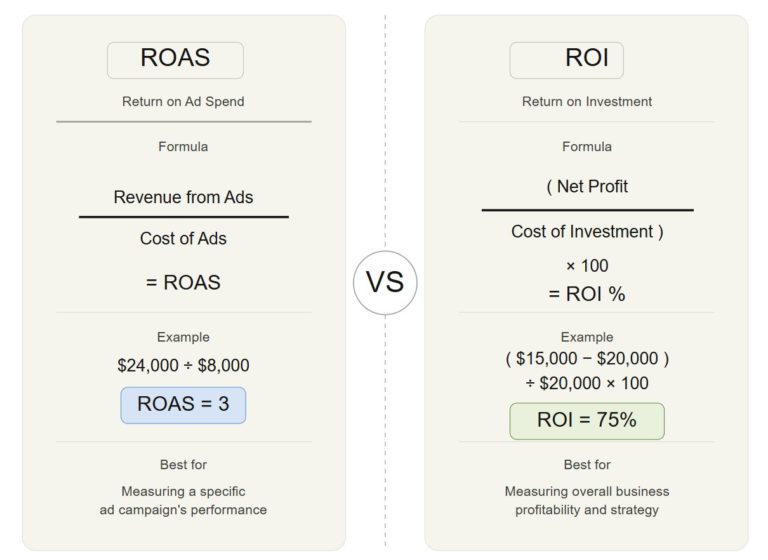
Our goal is to make your company profitable. It’s not just about ROAS but also about increasing your ROI. ROAS is return on Ad spend and ROI is return on total money you spend on the sale of your product which includes the manufacturing and other variable or fixed costs. This is why we will sit down with our clients to understand their business and their goals so we can help them scale their business through our marketing strategies.
As you scale the ROAS might not increase as it is always easier to find 10 more customers from 40 to 50th customer than it will be to find 2000 customers from 8000 to 10,000 customers. However, ROAS although being an important metric is not what makes your company profitable as ROI does and even with a lower ROAS if your profits are high, then that is where we meet our end marketing goal.